Vidaza (azacitidine)
Bristol Myers Squibb; generics widely available · Hypomethylating Agent (HMA) / DNA Methyltransferase Inhibitor
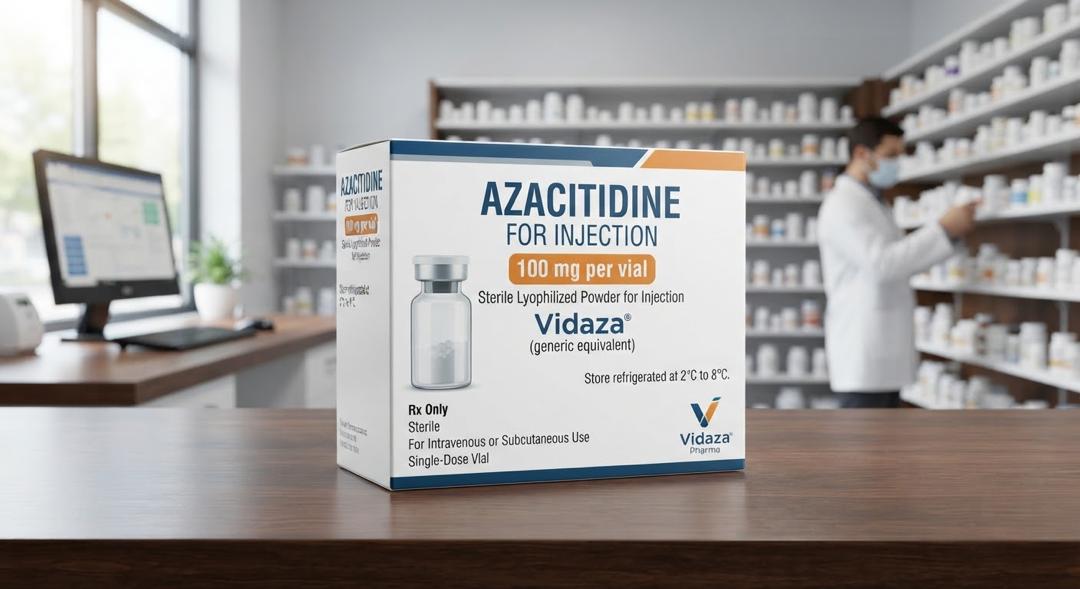
What is Vidaza? Vidaza (azacitidine) is a hypomethylating agent (HMA) used in the treatment of myelodysplastic syndromes (MDS) and acute myeloid leukemia (AML). It works by inhibiting DNA methylation, restoring normal gene expression in malignant hematopoietic cells.
About Vidaza
| Brand Name | Vidaza |
| Generic / INN | azacitidine |
| Drug Class | Hypomethylating Agent (HMA) / DNA Methyltransferase Inhibitor |
| Manufacturer | Bristol Myers Squibb; generics widely available |
| Administration | Subcutaneous (SC) injection or Intravenous (IV) infusion |
| FDA Approval | 2004 |
FDA-Approved Uses for Vidaza
Indications are based on FDA approval. Your healthcare provider determines appropriate use based on your specific diagnosis, stage, biomarker status, and overall clinical picture.
- Myelodysplastic syndromes (MDS) — all FAB subtypes (RA, RARS, RAEB, RAEB-T, CMML)
- Acute myeloid leukemia (AML) — certain subtypes and settings
How Does Vidaza Work?
Azacitidine is a pyrimidine nucleoside analog that incorporates into DNA and RNA. It inhibits DNA methyltransferase, leading to hypomethylation of DNA. In cancer cells, this can restore normal expression of tumor suppressor genes that were silenced by hypermethylation, resulting in cellular differentiation and death of abnormal hematopoietic cells.
Dosage & Administration
75 mg/m² administered subcutaneously or intravenously daily for 7 days, repeated every 28 days. At least 4–6 cycles recommended before assessing response. Dose adjustments based on hematologic toxicity and renal function.
Warnings, Precautions & Side Effects
General Warning
Myelosuppression — can be severe. Renal toxicity — monitor renal function. Hepatotoxicity — use with caution in hepatic impairment. Embryo-fetal toxicity. Male reproductive toxicity.
Common Side Effects
- Nausea
- Vomiting
- Constipation
- Neutropenia
- Thrombocytopenia
- Anemia
- Injection site reactions
- Fatigue
- Pyrexia
This is not a complete list. Always report new or worsening symptoms to your healthcare provider promptly.
Storage & Handling
Unreconstituted vials: refrigerate at 2°C to 8°C (36°F to 46°F). Reconstituted suspension for SC use: room temperature, use within 1 hour. Reconstituted IV solution: refrigerate, use within 8 hours.
BiologicHealthPlus provides temperature-monitored cold-chain specialty delivery for medications requiring refrigeration. Never use a medication if its storage conditions have been compromised.
Insurance Coverage, Prior Authorization & Patient Assistance
🛡️ Commercial Insurance
Vidaza is covered by most major commercial insurance plans when medically necessary and prior authorized. Coverage tier and cost-sharing vary by plan.
✅ Prior Authorization
Prior authorization is required by virtually all insurance plans for Vidaza. BiologicHealthPlus handles the complete prior authorization process at no cost to patients or providers.
🏥 Medicare Coverage
Medicare Part B covers this IV medication when administered in a clinical setting. Medicaid coverage varies by state.
🆓 Patient Assistance
Manufacturer patient assistance programs may be available for eligible uninsured or underinsured patients. Contact BiologicHealthPlus for a confidential eligibility review.
Prior Authorization Patient Assistance Insurance & Savings Medication Costs
Frequently Asked Questions — Vidaza
Vidaza (azacitidine) is a hypomethylating agent used to treat myelodysplastic syndromes (MDS) and certain forms of AML. It reactivates tumor suppressor genes by reversing abnormal DNA methylation in malignant blood cells.
Azacitidine is injected subcutaneously (under the skin) or infused intravenously, typically for 7 consecutive days every 28 days. At least 4–6 treatment cycles are usually needed before the full benefit can be assessed.
Yes. Generic azacitidine is widely available from multiple manufacturers. Vidaza is the original brand name. An oral tablet formulation (Onureg) is also FDA-approved for AML maintenance.
Both are hypomethylating agents with similar mechanisms, but they differ in structure, dosing schedules, and approved indications. Azacitidine can be given SC or IV; decitabine is IV only. Clinical selection depends on patient factors and disease characteristics.
Generic azacitidine is covered by Medicare Part B (IV) and Part D (depending on formulation), and by most commercial insurance plans with prior authorization.
Related Medications & Conditions
Related Medications
Dacogen (decitabine) · Onureg (azacitidine oral) · Venetoclax · Idhifa (enasidenib)
Related Conditions
Myelodysplastic syndromes (MDS) · Acute myeloid leukemia (AML) · Chronic myelomonocytic leukemia (CMML)