Trisenox (arsenic trioxide)
Teva Pharmaceuticals; generics available · Antineoplastic Agent — Arsenic Compound
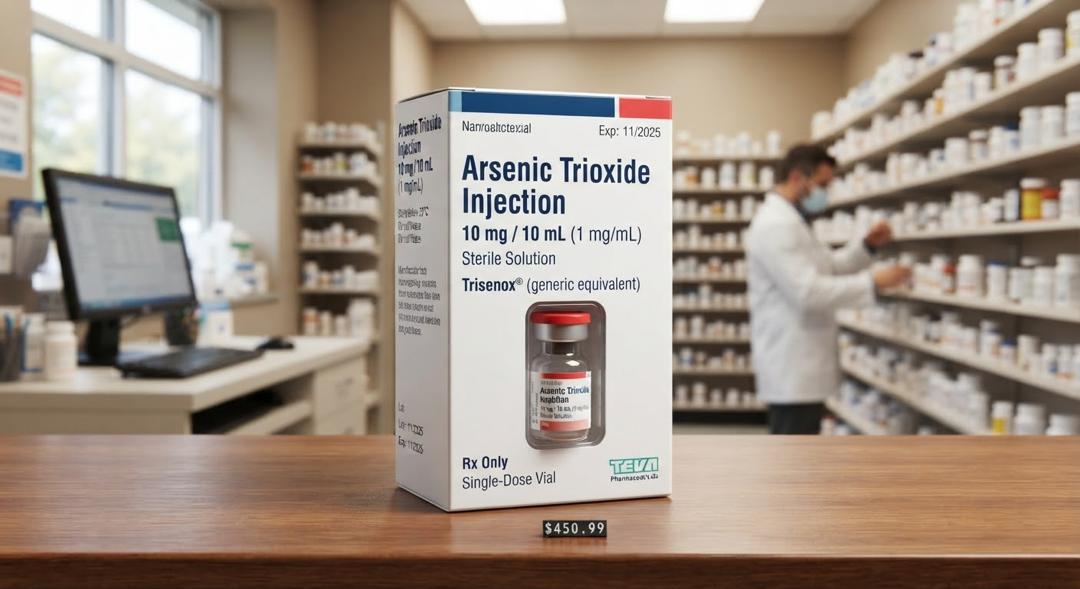
What is Trisenox? Trisenox (arsenic trioxide) is an antineoplastic agent used in combination with all-trans retinoic acid (ATRA) for the induction and consolidation of adults with newly diagnosed low-risk acute promyelocytic leukemia (APL) with PML/RARα gene expression.
About Trisenox
| Brand Name | Trisenox |
| Generic / INN | arsenic trioxide |
| Drug Class | Antineoplastic Agent — Arsenic Compound |
| Manufacturer | Teva Pharmaceuticals; generics available |
| Administration | Intravenous (IV) infusion |
| FDA Approval | 2000 |
FDA-Approved Uses for Trisenox
Indications are based on FDA approval. Your healthcare provider determines appropriate use based on your specific diagnosis, stage, biomarker status, and overall clinical picture.
- Newly diagnosed low-to-intermediate risk acute promyelocytic leukemia (APL) — in combination with ATRA
- Relapsed or refractory APL — in patients who have received retinoid and anthracycline chemotherapy
How Does Trisenox Work?
Arsenic trioxide causes morphological changes and DNA fragmentation in APL cells, triggering apoptosis. It damages or degrades the PML/RARα fusion protein (the driver of APL) and causes differentiation of APL cells — similar to but complementary to the mechanism of all-trans retinoic acid (ATRA).
Dosage & Administration
Dosing is indication-specific (induction vs. consolidation) and based on body weight (mg/kg). Administered as a 2-hour IV infusion; may extend to 4 hours if acute vasomotor reactions occur. Precise schedule is determined by the treating hematologist.
Warnings, Precautions & Side Effects
General Warning
APL DIFFERENTIATION SYNDROME — can be fatal; monitor closely and treat immediately with dexamethasone if suspected. QT interval prolongation and torsades de pointes — EKG monitoring required. Electrolyte monitoring essential (hypokalemia and hypomagnesemia increase QT risk). Embryo-fetal toxicity.
Common Side Effects
- Fatigue
- Nausea
- Vomiting
- Peripheral neuropathy
- Hyperglycemia
- Edema
- Cough
- QT prolongation
This is not a complete list. Always report new or worsening symptoms to your healthcare provider promptly.
Storage & Handling
Store at room temperature 15°C to 30°C (59°F to 86°F). Do not freeze.
BiologicHealthPlus provides temperature-monitored cold-chain specialty delivery for medications requiring refrigeration. Never use a medication if its storage conditions have been compromised.
Insurance Coverage, Prior Authorization & Patient Assistance
🛡️ Commercial Insurance
Trisenox is covered by most major commercial insurance plans when medically necessary and prior authorized. Coverage tier and cost-sharing vary by plan.
✅ Prior Authorization
Prior authorization is required by virtually all insurance plans for Trisenox. BiologicHealthPlus handles the complete prior authorization process at no cost to patients or providers.
🏥 Medicare Coverage
Medicare Part B covers this IV medication when administered in a clinical setting. Medicaid coverage varies by state.
🆓 Patient Assistance
Manufacturer patient assistance programs may be available for eligible uninsured or underinsured patients. Contact BiologicHealthPlus for a confidential eligibility review.
Prior Authorization Patient Assistance Insurance & Savings Medication Costs
Frequently Asked Questions — Trisenox
Trisenox (arsenic trioxide) is an IV chemotherapy approved for acute promyelocytic leukemia (APL). Used with all-trans retinoic acid (ATRA), it is a highly effective treatment for PML/RARα-positive APL and has transformed outcomes for this disease.
APL differentiation syndrome (formerly retinoic acid syndrome) is a potentially fatal complication that occurs when leukemia cells differentiate rapidly. Symptoms include fever, pulmonary infiltrates, respiratory distress, and fluid retention. It requires immediate treatment with dexamethasone.
Yes — arsenic trioxide can prolong the QT interval on EKG, increasing the risk of a dangerous arrhythmia called torsades de pointes. Continuous EKG monitoring and strict electrolyte management (especially potassium and magnesium) are required during treatment.
Yes. Generic arsenic trioxide 10 mg/10 mL injection is available from multiple manufacturers, including Teva. Trisenox is the original brand.
Related Medications & Conditions
Related Medications
ATRA (tretinoin/Vesanoid) · Anthracyclines (daunorubicin/idarubicin) · Gemtuzumab ozogamicin (Mylotarg)
Related Conditions
Acute promyelocytic leukemia (APL) · Acute myeloid leukemia (AML) · Hematologic malignancies