Mitomycin (mitomycin)
Multiple manufacturers; also available as brand Jelmyto (UroGen Pharma) for urothelial use · Antitumor Antibiotic / Alkylating Agent
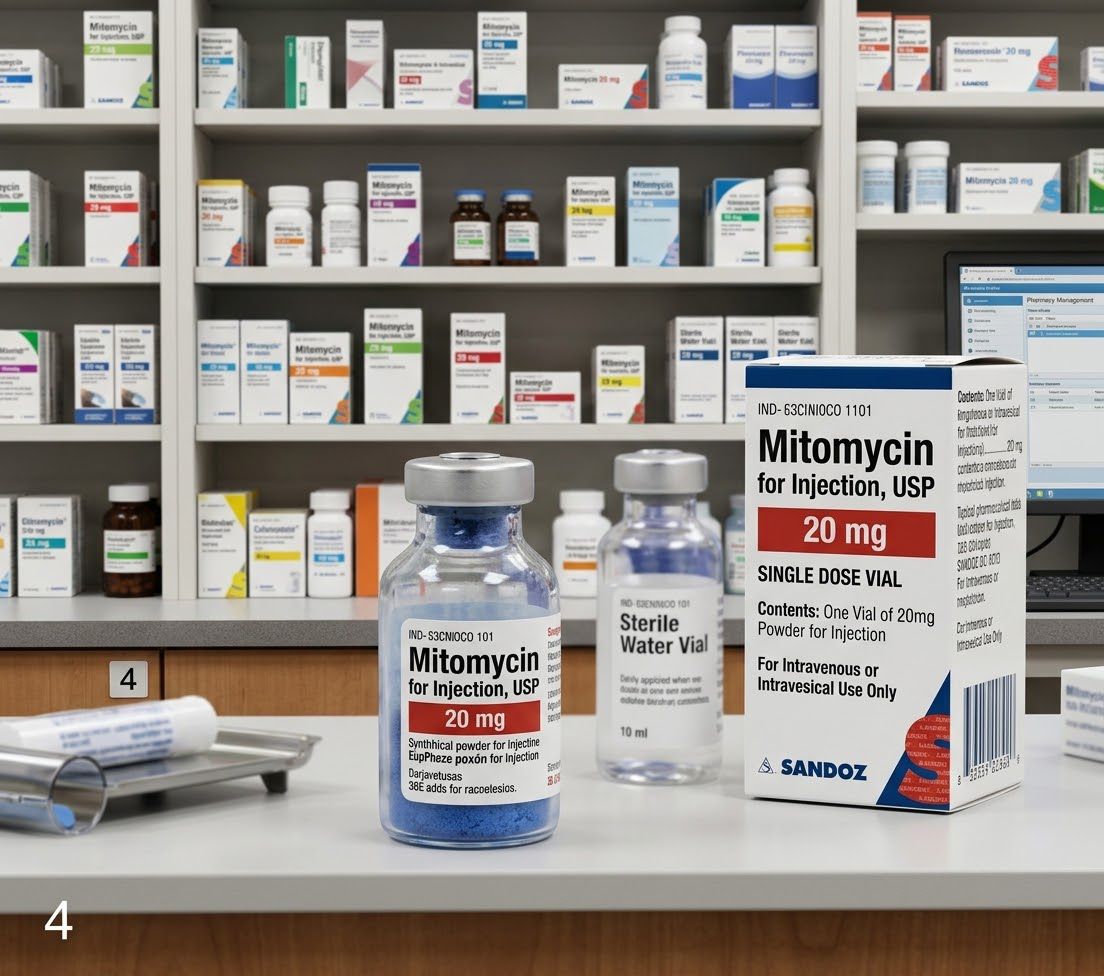
What is Mitomycin? Mitomycin is an antitumor antibiotic chemotherapy agent with alkylating properties. It is used intravenously in combination regimens for various cancers and intravesically for bladder cancer.
About Mitomycin
| Brand Name | Mitomycin |
| Generic / INN | mitomycin |
| Drug Class | Antitumor Antibiotic / Alkylating Agent |
| Manufacturer | Multiple manufacturers; also available as brand Jelmyto (UroGen Pharma) for urothelial use |
| Administration | Intravenous (IV) infusion or intravesical instillation |
| FDA Approval | 1974 |
| Presentation | Mitomycin is available as a lyophilized powder in 5 mg, 20 mg, and 40 mg vials from multiple generic manufacturers. |
FDA-Approved Uses for Mitomycin
The following indications are based on FDA approval as of the last review date. Your oncologist will determine appropriate use based on your specific cancer type, stage, biomarker status, and overall treatment plan.
- Gastric cancer (combination IV, after other agents)
- Pancreatic cancer (combination IV)
- Bladder cancer — superficial (intravesical instillation to prevent recurrence after TURBT)
- Upper tract urothelial cancer (Jelmyto — pyelocalyceal instillation)
- Non-small cell lung cancer (combination, off-label settings)
How Does Mitomycin Work?
Mitomycin is a bioreductive alkylating agent. After enzymatic activation, it forms crosslinks within DNA strands (interstrand and intrastrand crosslinks), inhibiting DNA replication and causing cell death. It is cell cycle non-specific.
Dosage & Administration
Dosing depends on route, indication, and regimen. IV dosing is weight-based (BSA). Intravesical dosing for bladder cancer is typically a fixed dose instilled directly into the bladder. Jelmyto has its own approved dosing for upper tract urothelial cancer.
Warnings, Precautions & Side Effects
General Warning
SEVERE myelosuppression is dose-limiting and cumulative for IV use. Hemolytic uremic syndrome (HUS) — a rare but life-threatening reaction — has been reported. Pulmonary toxicity. Mitomycin is a potent vesicant — IV extravasation causes severe tissue necrosis. For intravesical use: bladder irritation and chemical cystitis.
Common Side Effects
- Myelosuppression
- Nausea
- Vomiting
- Mucositis
- Alopecia
- Bladder irritation (intravesical)
- Anorexia
- Fatigue
This is not a complete list. Report any new or worsening symptoms to your oncologist or healthcare provider promptly.
Storage & Handling
Store unreconstituted mitomycin at controlled room temperature 15°C to 30°C (59°F to 86°F). Protect from light.
Oncology medications require careful handling. BiologicHealthPlus provides cold-chain specialty delivery with temperature monitoring for medications that require refrigeration. Do not use the medication if the storage chain has been compromised.
Insurance Coverage, Prior Authorization & Patient Assistance
🛡️ Commercial Insurance
Mitomycin is a specialty oncology medication covered by most major commercial insurance plans when medically necessary and prior authorized. Coverage varies by plan, indication, and formulary tier. BiologicHealthPlus verifies benefits at no cost to patients.
✅ Prior Authorization
Prior authorization is required by virtually all insurance plans for Mitomycin. Our team handles the full prior authorization process — submitting clinical documentation, peer-to-peer reviews when needed, and appeals — at no cost to patients or providers.
🏥 Medicare & Medicaid
Medicare coverage for oncology medications depends on route of administration. Intravenous oncology medications are typically covered under Medicare Part B (medical benefit) when administered in a clinical setting. Subcutaneous formulations may be covered under Part B or Part D depending on administration circumstances. Medicaid coverage varies by state.
🆓 Patient Assistance Programs
Manufacturer patient assistance programs may be available for eligible uninsured or underinsured patients. BiologicHealthPlus can assess your eligibility and help with the application process. Contact our team for a confidential eligibility review.
Prior Authorization Guide Patient Assistance Programs Insurance & Savings Medication Costs
Frequently Asked Questions About Mitomycin
Mitomycin is used as an IV chemotherapy in combination regimens for gastric and pancreatic cancer, and intravesically (instilled into the bladder) after TURBT to prevent recurrence of superficial bladder cancer. Jelmyto is a gel formulation for upper tract urothelial cancer.
Jelmyto contains mitomycin in a sustained-release pyelocalyceal gel formulation approved by the FDA for low-grade upper tract urothelial cancer (UTUC). Standard mitomycin is a different formulation used for different settings.
The most serious risks are severe cumulative myelosuppression (particularly thrombocytopenia and anemia) and hemolytic uremic syndrome (HUS), a potentially life-threatening condition. IV extravasation causes severe tissue necrosis.
For superficial bladder cancer, mitomycin is instilled directly into the bladder through a catheter (intravesical instillation), usually after TURBT (transurethral resection of bladder tumor). This is a local treatment with much less systemic toxicity than IV mitomycin.
Related Medications & Conditions
Related Medications
Gemcitabine · Cisplatin · Fluorouracil (5-FU) · Anktiva
Related Conditions
Bladder cancer (NMIBC) · Gastric cancer · Pancreatic cancer · Upper tract urothelial cancer