Gemcitabine (gemcitabine hydrochloride)
Multiple manufacturers (generic); original brand: Gemzar by Eli Lilly · Nucleoside Antimetabolite / Chemotherapy
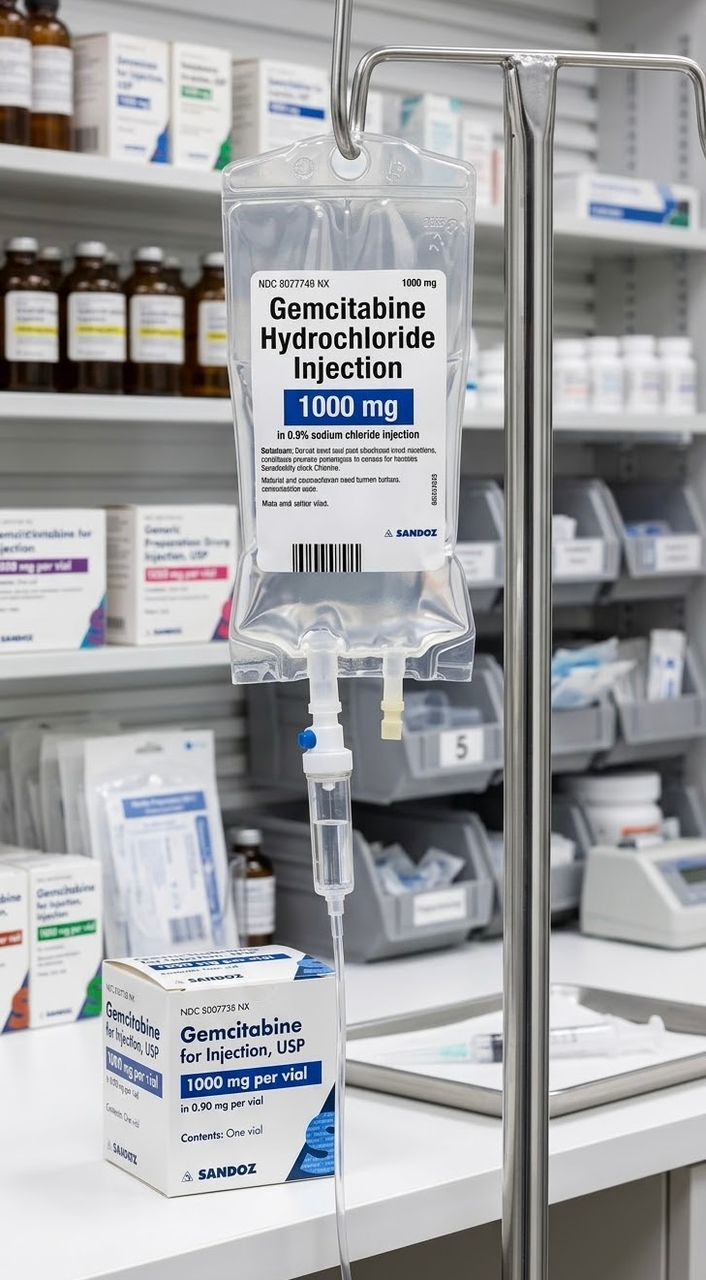
What is Gemcitabine? Gemcitabine is a nucleoside antimetabolite chemotherapy agent used as monotherapy or in combination regimens for multiple cancer types. It is available as a generic medication.
About Gemcitabine
| Brand Name | Gemcitabine |
| Generic / INN | gemcitabine hydrochloride |
| Drug Class | Nucleoside Antimetabolite / Chemotherapy |
| Manufacturer | Multiple manufacturers (generic); original brand: Gemzar by Eli Lilly |
| Administration | Intravenous (IV) infusion |
| FDA Approval | 1996 |
| Presentation | Gemcitabine is available in 200 mg, 1 g, and 2 g vials as lyophilized powder for reconstitution, and in premixed solutions from various manufacturers. |
FDA-Approved Uses for Gemcitabine
The following indications are based on FDA approval as of the last review date. Your oncologist will determine appropriate use based on your specific cancer type, stage, biomarker status, and overall treatment plan.
- Non-small cell lung cancer (combination with cisplatin)
- Pancreatic cancer
- Breast cancer (combination with paclitaxel, after anthracycline)
- Ovarian cancer (combination with carboplatin, after platinum-based therapy)
- Bladder cancer (off-label and guideline-supported combination uses)
How Does Gemcitabine Work?
Gemcitabine is a nucleoside analog that is incorporated into replicating DNA, inhibiting DNA synthesis and triggering apoptosis (programmed cell death) in cancer cells. It inhibits ribonucleotide reductase and DNA polymerase, disrupting cancer cell replication.
Dosage & Administration
Dosing is determined by the oncologist based on body surface area (BSA), indication, and combination regimen. Common schedules include weekly infusions for several weeks followed by a rest period.
Warnings, Precautions & Side Effects
General Warning
Myelosuppression (including severe thrombocytopenia, anemia, and neutropenia) is dose-limiting. Pulmonary toxicity, hemolytic uremic syndrome (HUS), hepatotoxicity, and renal failure have been reported. Gemcitabine should be used with caution in hepatic or renal impairment.
Common Side Effects
- Nausea
- Vomiting
- Fatigue
- Anemia
- Neutropenia
- Thrombocytopenia
- Elevated liver enzymes
- Rash
- Flu-like symptoms
- Edema
This is not a complete list. Report any new or worsening symptoms to your oncologist or healthcare provider promptly.
Storage & Handling
Reconstituted gemcitabine solution: store at controlled room temperature 20°C to 25°C (68°F to 77°F). Stable for 24 hours at room temperature. Do not refrigerate reconstituted solution.
Oncology medications require careful handling. BiologicHealthPlus provides cold-chain specialty delivery with temperature monitoring for medications that require refrigeration. Do not use the medication if the storage chain has been compromised.
Insurance Coverage, Prior Authorization & Patient Assistance
🛡️ Commercial Insurance
Gemcitabine is a specialty oncology medication covered by most major commercial insurance plans when medically necessary and prior authorized. Coverage varies by plan, indication, and formulary tier. BiologicHealthPlus verifies benefits at no cost to patients.
✅ Prior Authorization
Prior authorization is required by virtually all insurance plans for Gemcitabine. Our team handles the full prior authorization process — submitting clinical documentation, peer-to-peer reviews when needed, and appeals — at no cost to patients or providers.
🏥 Medicare & Medicaid
Medicare coverage for oncology medications depends on route of administration. Intravenous oncology medications are typically covered under Medicare Part B (medical benefit) when administered in a clinical setting. Subcutaneous formulations may be covered under Part B or Part D depending on administration circumstances. Medicaid coverage varies by state.
🆓 Patient Assistance Programs
Manufacturer patient assistance programs may be available for eligible uninsured or underinsured patients. BiologicHealthPlus can assess your eligibility and help with the application process. Contact our team for a confidential eligibility review.
Prior Authorization Guide Patient Assistance Programs Insurance & Savings Medication Costs
Frequently Asked Questions About Gemcitabine
Gemcitabine is an FDA-approved chemotherapy for pancreatic cancer, non-small cell lung cancer (in combination with cisplatin), breast cancer (in combination with paclitaxel), and ovarian cancer (in combination with carboplatin). It is also used in other cancer types in combination regimens.
Gemcitabine is administered as an intravenous infusion, typically over 30 minutes. Schedules vary by indication but often involve weekly infusions with rest periods.
Yes. Gemcitabine is available as a generic drug. The original brand name was Gemzar (Eli Lilly). Multiple FDA-approved generic versions are available.
The most common and serious side effect is myelosuppression — lowering of blood cell counts including neutrophils, platelets, and red blood cells. Nausea, fatigue, flu-like symptoms, and elevated liver enzymes are also common.
Generic gemcitabine may have different prior authorization requirements than branded oncology agents. Coverage depends on the insurance plan and the specific indication.
Related Medications & Conditions
Related Medications
Cisplatin · Carboplatin · Paclitaxel · Nab-paclitaxel
Related Conditions
Pancreatic cancer · Non-small cell lung cancer · Breast cancer · Ovarian cancer · Bladder cancer