Melphalan (melphalan)
Multiple manufacturers (generic); original brand: Alkeran by Aspen Pharmacare · Alkylating Agent / Nitrogen Mustard
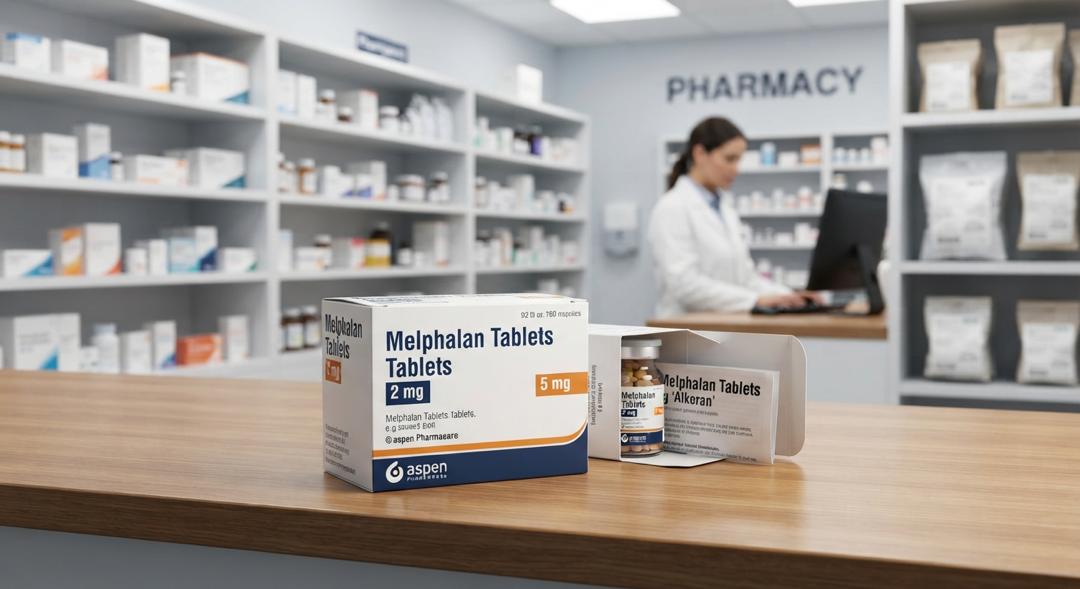
What is Melphalan? Melphalan (brand: Alkeran) is a nitrogen mustard alkylating agent used to treat multiple myeloma and ovarian carcinoma. It is also used as a high-dose conditioning regimen before autologous stem cell transplantation (ASCT) in myeloma.
About Melphalan
| Brand Name | Melphalan |
| Generic / INN | melphalan |
| Drug Class | Alkylating Agent / Nitrogen Mustard |
| Manufacturer | Multiple manufacturers (generic); original brand: Alkeran by Aspen Pharmacare |
| Administration | Oral tablet or Intravenous (IV) infusion |
| FDA Approval | 1964 |
FDA-Approved Uses for Melphalan
Indications are based on FDA approval. Your healthcare provider determines appropriate use based on your specific diagnosis, stage, biomarker status, and overall clinical picture.
- Multiple myeloma — palliative treatment
- Non-resectable epithelial carcinoma of the ovary — palliative treatment
- High-dose melphalan — conditioning regimen before autologous stem cell transplantation (ASCT) in multiple myeloma (IV formulation: Evomela)
How Does Melphalan Work?
Melphalan is a bifunctional alkylating agent that forms cross-links within and between DNA strands, interfering with DNA replication and transcription. It is cell cycle non-specific and has particular activity in hematopoietic tumor cells.
Dosage & Administration
Oral (multiple myeloma): 6 mg/day for 2–3 weeks, then rest, repeated as response and blood counts allow. IV high-dose (ASCT conditioning): Evomela or generic formulation at doses of 140–200 mg/m² per the transplant protocol. Renal impairment dose adjustment required.
Warnings, Precautions & Side Effects
General Warning
SEVERE myelosuppression — dose-limiting and potentially fatal. Secondary malignancies (acute myeloid leukemia, myelodysplastic syndrome) — increased risk with prolonged use. Pulmonary fibrosis. Hypersensitivity reactions (IV formulation). Embryo-fetal toxicity. Impaired fertility.
Common Side Effects
- Nausea
- Vomiting
- Myelosuppression
- Mucositis (high-dose)
- Alopecia
- Diarrhea
This is not a complete list. Always report new or worsening symptoms to your healthcare provider promptly.
Storage & Handling
Oral tablets: Store at 15°C to 30°C (59°F to 86°F) in a dry place. IV (Evomela): reconstituted solution refrigerate; use within 1 hour at room temperature.
BiologicHealthPlus provides temperature-monitored cold-chain specialty delivery for medications requiring refrigeration. Never use a medication if its storage conditions have been compromised.
Insurance Coverage, Prior Authorization & Patient Assistance
🛡️ Commercial Insurance
Melphalan is covered by most major commercial insurance plans when medically necessary and prior authorized. Coverage tier and cost-sharing vary by plan.
✅ Prior Authorization
Prior authorization is required by virtually all insurance plans for Melphalan. BiologicHealthPlus handles the complete prior authorization process at no cost to patients or providers.
🏥 Medicare Coverage
Medicare Part B covers this IV medication when administered in a clinical setting. Medicaid coverage varies by state.
🆓 Patient Assistance
Manufacturer patient assistance programs may be available for eligible uninsured or underinsured patients. Contact BiologicHealthPlus for a confidential eligibility review.
Prior Authorization Patient Assistance Insurance & Savings Medication Costs
Frequently Asked Questions — Melphalan
Melphalan is used to treat multiple myeloma and ovarian carcinoma, and at high doses as a conditioning regimen before autologous stem cell transplantation (ASCT) in myeloma.
Oral melphalan (2 mg tablets) is used for standard-dose palliative treatment of myeloma. IV melphalan at high doses (Evomela) is used as conditioning before ASCT. The two formulations are not interchangeable.
Secondary malignancies — particularly acute myeloid leukemia (AML) and myelodysplastic syndrome (MDS) — are a significant long-term risk with cumulative melphalan exposure.
Related Medications & Conditions
Related Medications
Revlimid (lenalidomide) · Velcade (bortezomib) · Darzalex (daratumumab) · Abecma · Carvykti
Related Conditions
Multiple myeloma · Ovarian carcinoma · Autologous stem cell transplant conditioning