Doxorubicin Hydrochloride (doxorubicin hydrochloride)
Multiple manufacturers (generic); original brand: Adriamycin · Anthracycline / Antitumor Antibiotic
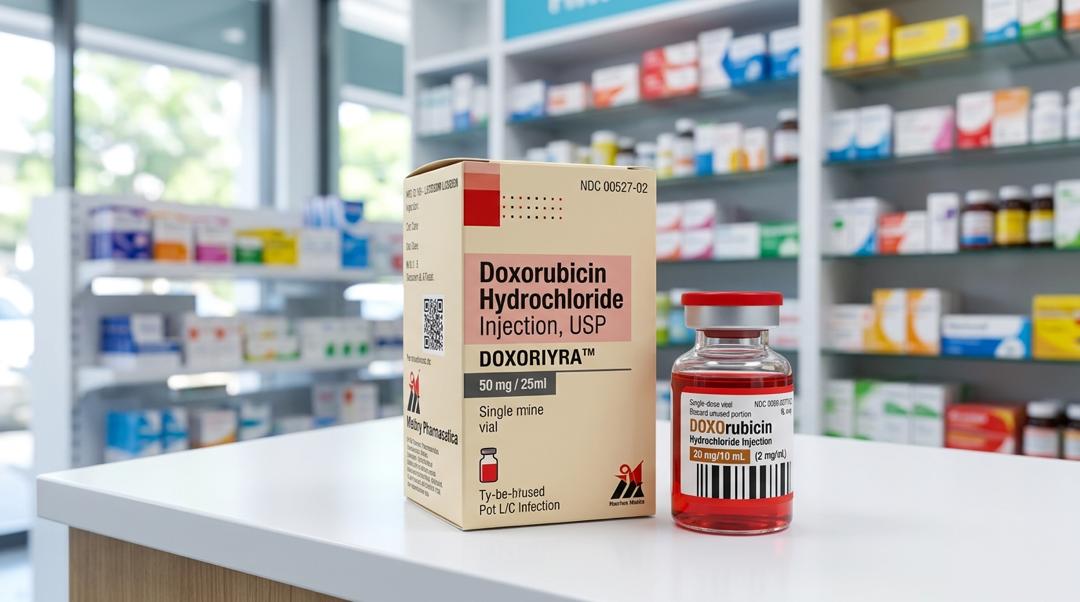
What is Doxorubicin Hydrochloride? Doxorubicin hydrochloride (brand: Adriamycin) is a foundational anthracycline chemotherapy used in combination regimens for breast cancer, bladder cancer, ovarian cancer, thyroid cancer, gastric cancer, Hodgkin lymphoma, non-Hodgkin lymphoma, acute leukemias, and many soft tissue and bone sarcomas.
About Doxorubicin Hydrochloride
| Brand Name | Doxorubicin Hydrochloride |
| Generic / INN | doxorubicin hydrochloride |
| Drug Class | Anthracycline / Antitumor Antibiotic |
| Manufacturer | Multiple manufacturers (generic); original brand: Adriamycin |
| Administration | Intravenous (IV) injection or infusion |
| FDA Approval | 1974 |
FDA-Approved Uses for Doxorubicin Hydrochloride
Indications are based on FDA approval. Your healthcare provider determines appropriate use based on your specific diagnosis, stage, biomarker status, and overall clinical picture.
- Breast cancer (combination)
- Bladder cancer
- Ovarian cancer
- Thyroid cancer
- Gastric cancer
- Bronchogenic carcinoma
- Hodgkin lymphoma (part of ABVD)
- Non-Hodgkin lymphoma
- Acute lymphoblastic leukemia (ALL)
- Acute myeloblastic leukemia (AML)
- Soft tissue and bone sarcomas
- Neuroblastoma
- Wilms tumor
How Does Doxorubicin Hydrochloride Work?
Doxorubicin intercalates into DNA, inhibiting topoisomerase II and causing DNA strand breaks. It also generates reactive oxygen species (ROS) through redox cycling, causing oxidative damage. These combined effects induce apoptosis in rapidly dividing cancer cells.
Dosage & Administration
Varies widely by indication and combination regimen. Typically 60–75 mg/m² IV every 3 weeks as monotherapy; 40–60 mg/m² in combination regimens. Administered as IV push or short infusion. CUMULATIVE LIFETIME DOSE must be tracked to avoid cardiotoxicity (generally 450–550 mg/m² cumulative limit).
Warnings, Precautions & Side Effects
General Warning
BOXED WARNINGS: Cardiotoxicity — cumulative dose-dependent cardiomyopathy (potentially fatal). Acute infusion reactions. Severe myelosuppression. Secondary malignancies (AML/MDS — rare). Tissue necrosis on extravasation (vesicant). Hepatic impairment requires dose reduction.
Common Side Effects
- Nausea/vomiting
- Alopecia (complete)
- Myelosuppression
- Red/orange urine (harmless)
- Mucositis
- Fatigue
This is not a complete list. Always report new or worsening symptoms to your healthcare provider promptly.
Storage & Handling
Store intact vials at 2°C to 8°C (36°F to 46°F). Protect from light. Diluted solutions: stable 24 hours at room temperature. Protect from light.
BiologicHealthPlus provides temperature-monitored cold-chain specialty delivery for medications requiring refrigeration. Never use a medication if its storage conditions have been compromised.
Insurance Coverage, Prior Authorization & Patient Assistance
🛡️ Commercial Insurance
Doxorubicin Hydrochloride is covered by most major commercial insurance plans when medically necessary and prior authorized. Coverage tier and cost-sharing vary by plan.
✅ Prior Authorization
Prior authorization is required by virtually all insurance plans for Doxorubicin Hydrochloride. BiologicHealthPlus handles the complete prior authorization process at no cost to patients or providers.
🏥 Medicare Coverage
Medicare Part B covers this IV medication when administered in a clinical setting. Medicaid coverage varies by state.
🆓 Patient Assistance
Manufacturer patient assistance programs may be available for eligible uninsured or underinsured patients. Contact BiologicHealthPlus for a confidential eligibility review.
Prior Authorization Patient Assistance Insurance & Savings Medication Costs
Frequently Asked Questions — Doxorubicin Hydrochloride
Doxorubicin is one of the most widely used chemotherapy agents, appearing in combination regimens for breast cancer, lymphomas, leukemias, sarcomas, and many other cancers.
Cumulative doxorubicin exposure causes dose-dependent cardiomyopathy (heart muscle damage). The risk rises significantly above 450–550 mg/m² lifetime cumulative dose. Baseline and periodic echocardiograms are required.
Doxorubicin is a red drug that is excreted in urine, turning it red or orange for 1–2 days after infusion. This is harmless and expected — not a sign of blood in urine.
Yes — doxorubicin is a severe vesicant. If it leaks outside the vein during infusion (extravasation), it causes severe tissue damage and necrosis. Immediate action including dexrazoxane treatment is required for anthracycline extravasation.
Related Medications & Conditions
Related Medications
Epirubicin · Pegylated liposomal doxorubicin (Doxil) · Cyclophosphamide · Trastuzumab (Herceptin) · ABVD regimen
Related Conditions
Breast cancer · Hodgkin lymphoma · Sarcomas · Acute leukemias · Ovarian cancer