Proleukin (aldesleukin)
Clinigen / formerly Prometheus Therapeutics · Recombinant Interleukin-2 (IL-2) / Immunotherapy
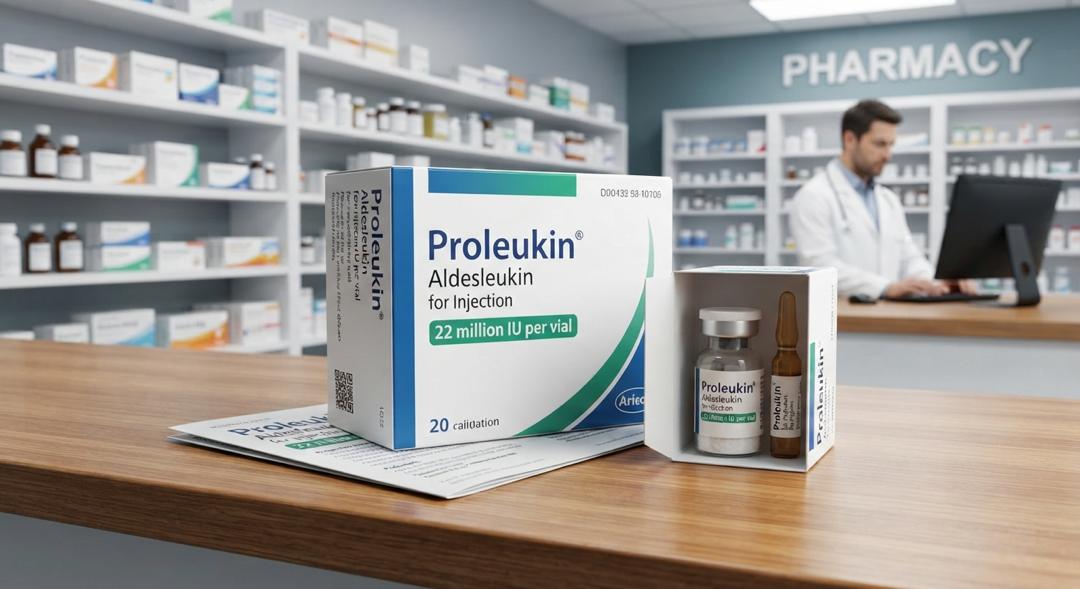
What is Proleukin? Proleukin (aldesleukin) is recombinant interleukin-2 (IL-2) used for metastatic renal cell carcinoma and metastatic melanoma. High-dose aldesleukin can produce durable complete responses in a subset of patients but requires intensive care setting due to serious toxicity.
About Proleukin
| Brand Name | Proleukin |
| Generic / INN | aldesleukin |
| Drug Class | Recombinant Interleukin-2 (IL-2) / Immunotherapy |
| Manufacturer | Clinigen / formerly Prometheus Therapeutics |
| Administration | Intravenous (IV) infusion (high-dose) or SC injection (low-dose) |
| FDA Approval | 1992 |
FDA-Approved Uses for Proleukin
Indications are based on FDA approval. Your healthcare provider determines appropriate use based on your specific diagnosis, stage, biomarker status, and overall clinical picture.
- Metastatic renal cell carcinoma (RCC) — adults
- Metastatic melanoma — adults
How Does Proleukin Work?
Aldesleukin is a recombinant form of human IL-2. It stimulates proliferation and activation of T lymphocytes, natural killer (NK) cells, and B cells, enhancing the immune system's ability to recognize and destroy cancer cells. Post-infusion, lifileucel (TIL therapy) requires high-dose aldesleukin to expand the infused tumor-infiltrating lymphocytes.
Dosage & Administration
High-dose: 600,000 IU/kg IV every 8 hours for up to 14 doses per cycle; repeat after rest. This regimen requires ICU-level monitoring and is associated with severe toxicity. Patient selection is critical.
Warnings, Precautions & Side Effects
General Warning
BOXED WARNINGS: Capillary leak syndrome (CLS) — can cause fatal multi-organ failure. Severe bacterial infections and sepsis. Severe cardiac, pulmonary, renal, and CNS toxicity. Proleukin must be administered in a hospital setting with intensive monitoring. Contraindicated in patients with organ allografts, abnormal thallium stress test, or abnormal pulmonary function tests.
Common Side Effects
- Capillary leak syndrome
- Hypotension
- Oliguria
- Fever/chills
- Confusion
- Nausea
- Anemia
- Thrombocytopenia
This is not a complete list. Always report new or worsening symptoms to your healthcare provider promptly.
Storage & Handling
Refrigerate at 2°C to 8°C (36°F to 46°F). Do not freeze. Reconstituted solution: stable 48 hours refrigerated.
BiologicHealthPlus provides temperature-monitored cold-chain specialty delivery for medications requiring refrigeration. Never use a medication if its storage conditions have been compromised.
Insurance Coverage, Prior Authorization & Patient Assistance
🛡️ Commercial Insurance
Proleukin is covered by most major commercial insurance plans when medically necessary and prior authorized. Coverage tier and cost-sharing vary by plan.
✅ Prior Authorization
Prior authorization is required by virtually all insurance plans for Proleukin. BiologicHealthPlus handles the complete prior authorization process at no cost to patients or providers.
🏥 Medicare Coverage
Medicare Part B covers this IV medication when administered in a clinical setting. Medicaid coverage varies by state.
🆓 Patient Assistance
Manufacturer patient assistance programs may be available for eligible uninsured or underinsured patients. Contact BiologicHealthPlus for a confidential eligibility review.
Prior Authorization Patient Assistance Insurance & Savings Medication Costs
Frequently Asked Questions — Proleukin
Proleukin (aldesleukin) is recombinant IL-2 that activates the immune system against cancer. It is approved for metastatic renal cell carcinoma and metastatic melanoma. High-dose therapy can produce durable complete responses in a minority of patients.
High-dose IL-2 causes capillary leak syndrome — widespread plasma leakage from blood vessels — leading to severe hypotension, fluid accumulation in tissues, and potential multi-organ failure. It must be given in an ICU-level setting with intensive monitoring.
After lifileucel (TIL cell therapy) infusion, high-dose aldesleukin is administered to promote expansion and survival of the infused tumor-infiltrating lymphocytes in the patient's body.
Related Medications & Conditions
Related Medications
Keytruda (pembrolizumab) · Tecentriq (atezolizumab) · Lifileucel (requires IL-2 post-infusion) · Opdivo (nivolumab)
Related Conditions
Metastatic renal cell carcinoma · Metastatic melanoma