Adstiladrin (nadofaragene firadenovec-vncg)
Ferring Pharmaceuticals · Gene Therapy — Adenoviral Vector (Intravesical)
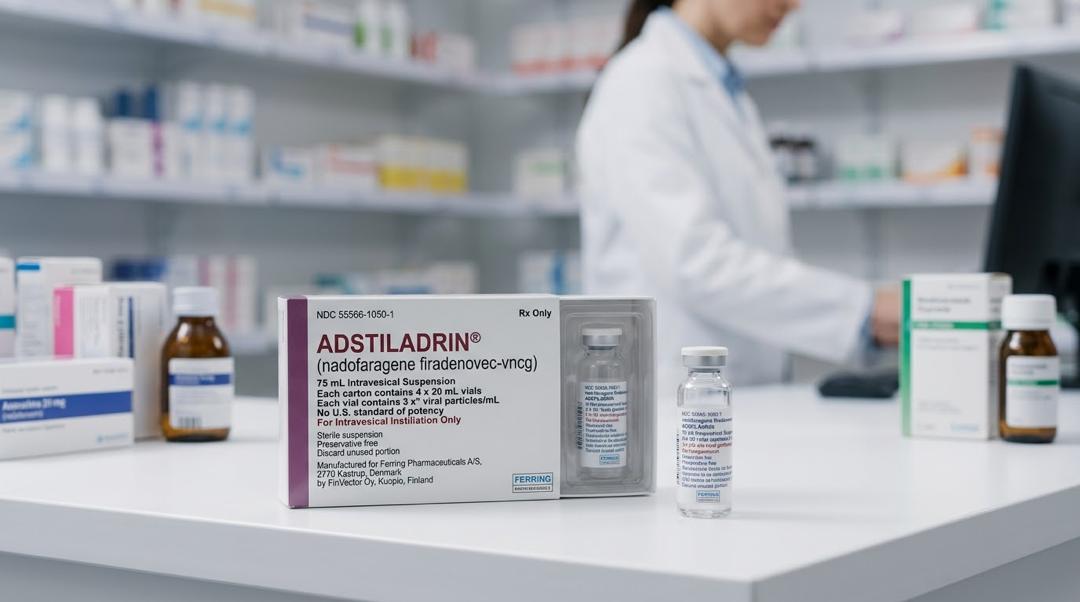
What is Adstiladrin? Adstiladrin (nadofaragene firadenovec-vncg) is a non-replicating adenoviral vector gene therapy instilled directly into the bladder to treat BCG-unresponsive non-muscle invasive bladder cancer (NMIBC) with carcinoma in situ (CIS) — with or without Ta or T1 papillary tumors.
About Adstiladrin
| Brand Name | Adstiladrin |
| Generic / INN | nadofaragene firadenovec-vncg |
| Drug Class | Gene Therapy — Adenoviral Vector (Intravesical) |
| Manufacturer | Ferring Pharmaceuticals |
| Administration | Intravesical instillation |
| FDA Approval | 2022 |
FDA-Approved Uses for Adstiladrin
Indications are based on FDA approval. Your healthcare provider determines appropriate use based on your specific diagnosis, stage, biomarker status, and overall clinical picture.
- BCG-unresponsive high-risk non-muscle invasive bladder cancer (NMIBC) with carcinoma in situ (CIS) with or without Ta or T1 papillary tumors
How Does Adstiladrin Work?
Nadofaragene firadenovec uses a recombinant non-replicating adenoviral vector (rAd) to deliver the interferon alfa-2b (IFN-α2b) gene directly to urothelial cells lining the bladder. Once inside bladder cells, the gene causes local production of IFN-α2b protein, which stimulates anti-tumor immune responses and has direct antiproliferative effects on bladder cancer cells.
Dosage & Administration
75 mL intravesical instillation (4 vials × 20 mL) quarterly (every 3 months) for up to 4 doses in the first year, then every 3 months as tolerated. Administered by catheter in a urologist's office or clinical setting.
Warnings, Precautions & Side Effects
General Warning
Bladder irritation symptoms (dysuria, frequency, urgency, hematuria) — common. Risk of viral exposure from urine (biosafety precautions for patients and caregivers for 6 hours after instillation). Contraindicated in patients with active urinary tract infection or compromised urothelium. Bladder spasm possible.
Common Side Effects
- Dysuria
- Urinary frequency and urgency
- Hematuria
- Bladder spasm
- Fatigue
- Chills/fever
- Flu-like symptoms (systemic IFN-α effects)
This is not a complete list. Always report new or worsening symptoms to your healthcare provider promptly.
Storage & Handling
Frozen at ≤ −65°C. Thaw per protocol before use. Single-use vials — discard unused portions.
BiologicHealthPlus provides temperature-monitored cold-chain specialty delivery for medications requiring refrigeration. Never use a medication if its storage conditions have been compromised.
Insurance Coverage, Prior Authorization & Patient Assistance
🛡️ Commercial Insurance
Adstiladrin is covered by most major commercial insurance plans when medically necessary and prior authorized. Coverage tier and cost-sharing vary by plan.
✅ Prior Authorization
Prior authorization is required by virtually all insurance plans for Adstiladrin. BiologicHealthPlus handles the complete prior authorization process at no cost to patients or providers.
🏥 Medicare Coverage
Medicare Part D covers this oral specialty medication. Medicaid coverage varies by state.
🆓 Patient Assistance
Manufacturer patient assistance programs may be available for eligible uninsured or underinsured patients. Contact BiologicHealthPlus for a confidential eligibility review.
Prior Authorization Patient Assistance Insurance & Savings Medication Costs
Frequently Asked Questions — Adstiladrin
Adstiladrin (nadofaragene firadenovec-vncg) is an intravesical gene therapy approved for BCG-unresponsive NMIBC with CIS. It uses an adenoviral vector to deliver the interferon alfa-2b gene to bladder cells, stimulating local anti-tumor immunity.
Both treat BCG-unresponsive NMIBC with CIS. Adstiladrin is a gene therapy delivering the IFN-α2b gene to bladder cells; Anktiva is an IL-15 superagonist that enhances NK and T cell activity when combined with BCG. They work through different mechanisms.
For 6 hours after instillation, urine may contain viral particles. Patients should use closed toilet systems and flush twice. Caregivers should avoid contact with urine during this period.
Adstiladrin is covered by commercial insurance and Medicare Part B for the approved BCG-unresponsive NMIBC indication with prior authorization and documentation of BCG-unresponsive status.
Related Medications & Conditions
Related Medications
Anktiva (nogapendekin alfa + BCG) · Keytruda (pembrolizumab — NMIBC) · Mitomycin (intravesical) · BCG
Related Conditions
BCG-unresponsive NMIBC · Non-muscle invasive bladder cancer · Carcinoma in situ (CIS) — bladder