BEACOPP Regimen (bleomycin/etoposide/doxorubicin/cyclophosphamide/vincristine/procarbazine/prednisone)
Multiple manufacturers (component drugs) · Combination Chemotherapy Regimen — Hodgkin Lymphoma
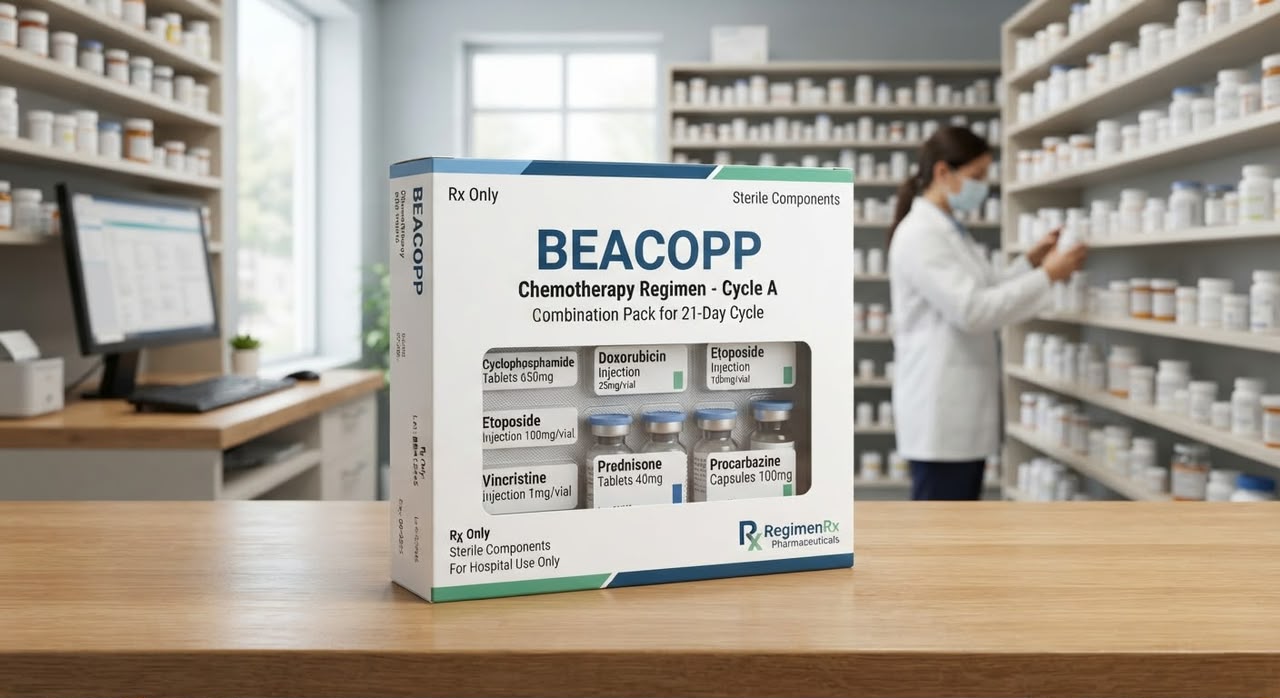
What is BEACOPP Regimen? BEACOPP is an intensified combination chemotherapy regimen used for advanced-stage Hodgkin lymphoma. It combines Bleomycin, Etoposide, Adriamycin (doxorubicin), Cyclophosphamide, Oncovin (vincristine), Procarbazine, and Prednisone. It achieves higher disease control rates than ABVD but with greater toxicity.
About BEACOPP Regimen
| Brand Name | BEACOPP Regimen |
| Generic / INN | bleomycin/etoposide/doxorubicin/cyclophosphamide/vincristine/procarbazine/prednisone |
| Drug Class | Combination Chemotherapy Regimen — Hodgkin Lymphoma |
| Manufacturer | Multiple manufacturers (component drugs) |
| Administration | Combination IV and oral |
| FDA Approval | Components individually FDA-approved; BEACOPP is an established clinical regimen |
FDA-Approved Uses
- Advanced-stage classical Hodgkin lymphoma (Stage III–IV) — escalated BEACOPP for high-risk disease
How Does BEACOPP Regimen Work?
BEACOPP combines 7 agents targeting multiple cancer cell mechanisms: bleomycin (DNA strand breaks), etoposide (topoisomerase II inhibitor), doxorubicin (DNA intercalator), cyclophosphamide (alkylating), vincristine (microtubule inhibitor), procarbazine (alkylating), and prednisone (anti-inflammatory/lympholytic). The combination provides synergistic anti-tumor activity.
Dosage & Administration
Escalated BEACOPP (eBEACOPP): 21-day cycles. Doxorubicin 35 mg/m² + cyclophosphamide 1250 mg/m² + etoposide 200 mg/m² on day 1; procarbazine 100 mg/m² days 1–7; vincristine 1.4 mg/m² day 8; bleomycin 10 U/m² day 8; prednisone 40 mg/m² days 1–14. G-CSF support required.
Dosing is individualized by the treating oncologist. Do not adjust without medical guidance. This page is educational only.
Warnings & Side Effects
- Severe myelosuppression — G-CSF mandatory
- Secondary malignancies (AML/MDS) — higher than ABVD
- Bleomycin pulmonary toxicity
- Infertility (high rate)
- Embryo-fetal toxicity
Common Side Effects
- Severe myelosuppression
- Nausea/vomiting
- Alopecia
- Fatigue
- Peripheral neuropathy
- Infections
- Mucositis
Storage & Handling
Each component has individual storage requirements. Prepared IV admixtures should be used promptly.
💰 Medication Cost & Insurance Coverage
Approximate Wholesale Acquisition Cost (WAC / List Price)
~$3,000–$8,000/cycle
7 generic components
Insurance & Prior Authorization
BEACOPP Regimen requires prior authorization from all major insurance plans. BiologicHealthPlus handles the full PA process — clinical documentation, peer-to-peer reviews, and appeals — at no cost to patients or providers.
Prior Authorization Guide Patient Assistance Insurance & Savings
Frequently Asked Questions — BEACOPP Regimen
BEACOPP is an intensified 7-drug chemotherapy regimen for advanced-stage Hodgkin lymphoma. Escalated BEACOPP achieves higher disease control rates than ABVD but with more toxicity including higher rates of secondary malignancies.
BEACOPP is typically reserved for Stage III-IV cHL patients with high-risk features. ABVD is more commonly used due to better tolerability; BEACOPP is used when the higher response rate justifies the greater toxicity.
Escalated BEACOPP carries a higher risk of secondary AML and MDS compared to ABVD, due to the higher doses of alkylating agents (cyclophosphamide, procarbazine) and etoposide. This is a critical consideration in young patients.
Related Medications & Conditions
Related Medications
ABVD regimen · Keytruda (pembrolizumab — relapsed cHL) · Adcetris (brentuximab vedotin) · G-CSF (mandatory support)
Related Conditions
Classical Hodgkin lymphoma (advanced stage) · Stage III-IV Hodgkin lymphoma