Azedra (iobenguane I-131)
Progenics Pharmaceuticals / Lantheus · Radiopharmaceutical — Norepinephrine Transporter-Targeted Radiotherapy
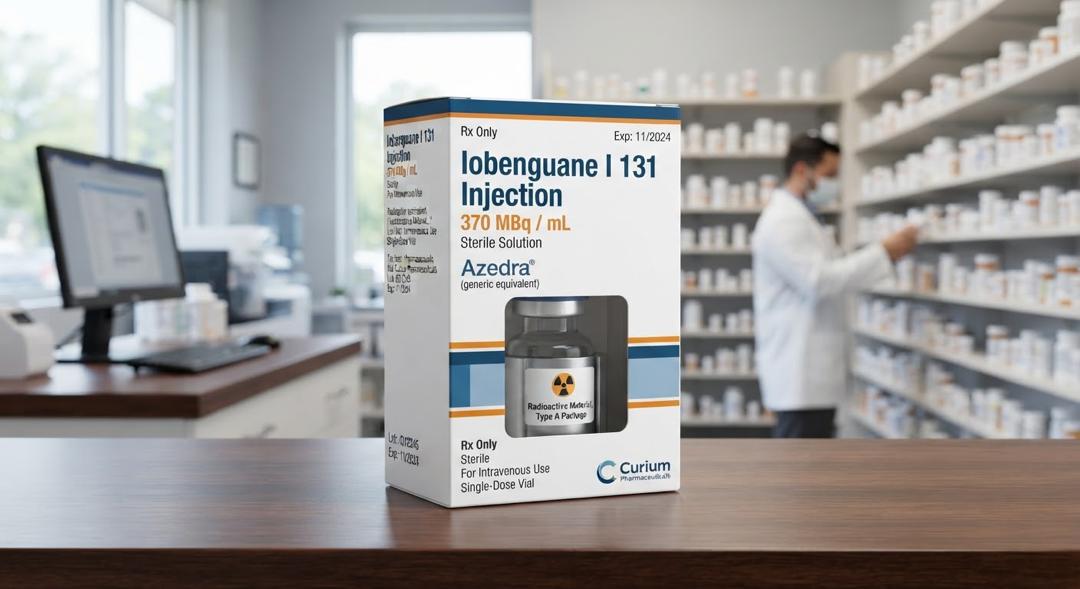
What is Azedra? Azedra (iobenguane I-131) is a radiopharmaceutical therapy approved for adult and pediatric patients 12 years and older with iobenguane scan-positive, unresectable, locally advanced or metastatic pheochromocytoma or paraganglioma requiring systemic anticancer therapy.
About Azedra
| Brand Name | Azedra |
| Generic / INN | iobenguane I-131 |
| Drug Class | Radiopharmaceutical — Norepinephrine Transporter-Targeted Radiotherapy |
| Manufacturer | Progenics Pharmaceuticals / Lantheus |
| Administration | Intravenous (IV) infusion — radioactive |
| FDA Approval | 2018 |
FDA-Approved Uses for Azedra
Indications are based on FDA approval. Your healthcare provider determines appropriate use based on your specific diagnosis, stage, biomarker status, and overall clinical picture.
- Unresectable, locally advanced or metastatic pheochromocytoma — adults and pediatric patients ≥12 years
- Unresectable, locally advanced or metastatic paraganglioma — adults and pediatric patients ≥12 years
- Patients must require systemic anticancer therapy and have iobenguane scan-positive disease
How Does Azedra Work?
Iobenguane I-131 is a meta-iodobenzylguanidine (mIBG) molecule labeled with iodine-131 (a beta-particle emitting radioisotope). Iobenguane is taken up by the norepinephrine transporter (NET) expressed on pheochromocytoma and paraganglioma cells. Once internalized, the iodine-131 delivers localized radiation to destroy tumor cells.
Dosage & Administration
Administered as two therapeutic doses 90 days apart (dosimetric dose first, then therapeutic dose). Requires thyroid protection with potassium iodide before each dose. Must be administered only at REMS-certified facilities with radiation safety infrastructure. Patients must be hospitalized during administration.
Warnings, Precautions & Side Effects
General Warning
BOXED WARNING: Radiation exposure to patients, caregivers, and healthcare providers. Myelosuppression (dose-limiting). Hypothyroidism — thyroid blocking required. Hypertensive crisis. Hepatotoxicity. Embryo-fetal and neonatal toxicity. Male reproductive toxicity. Azedra is available ONLY through the Azedra REMS Program.
Common Side Effects
- Fatigue
- Nausea
- Vomiting
- Myelosuppression
- Dizziness
- Hypertension
- Hypothyroidism risk
This is not a complete list. Always report new or worsening symptoms to your healthcare provider promptly.
Storage & Handling
Radioactive material — handled by nuclear pharmacy under radiation safety protocols. Stored per regulatory requirements for radioactive materials. Single-dose vial; use promptly after receipt.
BiologicHealthPlus provides temperature-monitored cold-chain specialty delivery for medications requiring refrigeration. Never use a medication if its storage conditions have been compromised.
Insurance Coverage, Prior Authorization & Patient Assistance
🛡️ Commercial Insurance
Azedra is covered by most major commercial insurance plans when medically necessary and prior authorized. Coverage tier and cost-sharing vary by plan.
✅ Prior Authorization
Prior authorization is required by virtually all insurance plans for Azedra. BiologicHealthPlus handles the complete prior authorization process at no cost to patients or providers.
🏥 Medicare Coverage
Medicare Part B covers this IV medication when administered in a clinical setting. Medicaid coverage varies by state.
🆓 Patient Assistance
Manufacturer patient assistance programs may be available for eligible uninsured or underinsured patients. Contact BiologicHealthPlus for a confidential eligibility review.
Prior Authorization Patient Assistance Insurance & Savings Medication Costs
Frequently Asked Questions — Azedra
Azedra (iobenguane I-131) is a targeted radiopharmaceutical approved for pheochromocytoma and paraganglioma. It delivers radiation directly to tumor cells using the norepinephrine transporter (NET) pathway and is given as two IV doses 90 days apart at REMS-certified facilities.
A pheochromocytoma is a rare tumor of the adrenal gland that produces excess catecholamines (adrenaline/noradrenaline), causing hypertension, headaches, and sweating. Paragangliomas are similar tumors arising outside the adrenal glands. Both express the NET transporter targeted by Azedra.
Yes. Azedra contains iodine-131, a radioactive isotope. It can only be administered at REMS-certified facilities with appropriate radiation safety infrastructure. Patients require hospitalization and radiation safety precautions during and after administration.
Yes — potassium iodide (or equivalent thyroid-blocking agent) must be administered starting at least 24 hours before each dose and continued after the dose to protect the thyroid gland from radioactive iodine uptake.
Azedra is covered by Medicare Part B and commercial insurance when medically indicated for iobenguane scan-positive pheochromocytoma or paraganglioma. Prior authorization with imaging documentation is required. BiologicHealthPlus can assist with benefits verification.
Related Medications & Conditions
Related Medications
Lutathera (lutetium Lu 177 dotatate) · Pluvicto (lutetium Lu 177 vipivotide tetraxetan) · Sunitinib · Everolimus
Related Conditions
Pheochromocytoma · Paraganglioma · Neuroendocrine tumors